Thinking About Going Off-Grid in San Diego? Here’s Your Complete Checklist
✅ Off-Grid Disconnection Checklist (SDG&E Customers)
1. Understand the Utility Disconnection Process
- Contact SDG&E to notify them of your intent to terminate service.
- Review any legal requirements or restrictions from your city or county — not all areas allow full disconnection.
- Expect paperwork, final inspections, and potential fees (like meter removal or reconnection charges if you change your mind).
2. Calculate Your Energy Needs
Before you design your system, you need to understand your actual energy usage. Instead of guessing or digging through bills:
➡️ Download your Green Button Data from SDG&E
This gives you detailed hourly usage over the past 12+ months — perfect for sizing your solar and battery needs accurately.
Look for:
- Total daily consumption in kWh
- Peak load hours (e.g., when AC kicks in)
- Seasonal variation (especially in summer vs. winter)
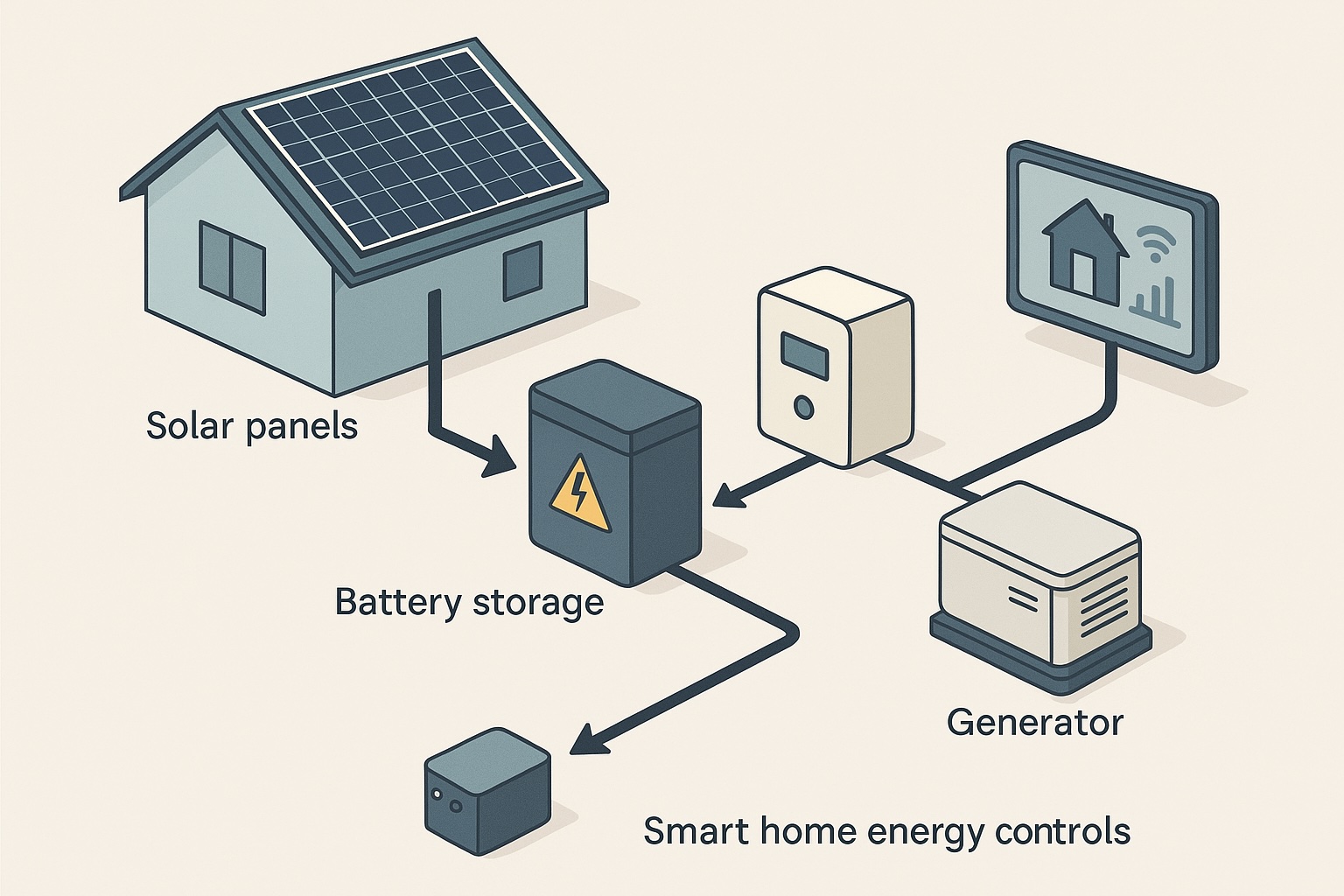
3. Design Your Independent Power System
- Solar panels: Primary generation source for Southern California
- Battery storage: Cover nights and cloudy days (plan for multiple days of autonomy)
- Inverter + charge controller: For safe DC/AC conversion and charging
- Backup generator: A must-have for cloudy weeks, maintenance periods, or emergencies
4. Plan for Redundancy — Don’t Rely on a Single Point of Failure
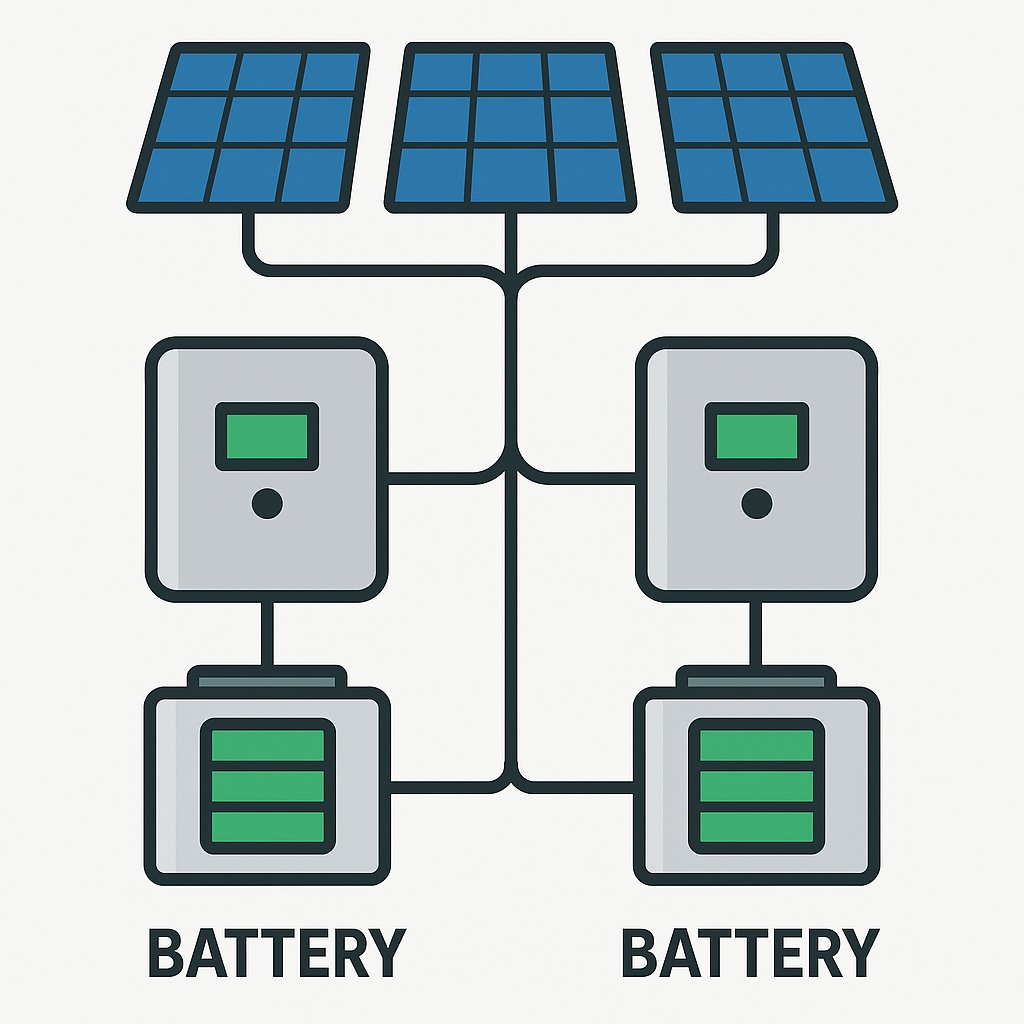
Going off-grid is more like running a miniature utility company than just installing solar panels. Like in aviation, where airplanes have 2 or 3 backup systems for every critical function, your energy system should have layers of redundancy:
- Multiple inverters or charge controllers, where feasible
- Keep critical spare parts on hand — think fuses, relays, cabling, even an extra MPPT charge controller
- Use locally sourced equipment when possible to avoid shipping delays
Imagine your inverter dies in July — and the replacement part is a European-manufactured unit with a 3-week lead time due to customs. How long can your household run without power?
Being truly off-grid means planning for the unexpected — not just the sunny days.
5. Boost Energy Efficiency
- Upgrade to Energy Star appliances
- Use LED lighting, smart thermostats, and timer-controlled loads
- Consider reducing non-essential loads (e.g., electric dryers, hot tubs)
The less energy you need, the smaller and more affordable your off-grid system can be.
6. Permits & Inspections
- Apply for electrical permits for your off-grid system
- Confirm zoning compliance for battery or solar installations
- Schedule final inspections before grid disconnection
7. Disconnect From the Grid
- Work with SDG&E to safely remove your meter and connection
- Ensure you're compliant with local building, fire, and utility codes
8. Monitor and Maintain
- Use smart tools to monitor solar generation, battery health, and usage
- Set a routine for:
- Cleaning panels
- Checking cables and terminals
- Running backup generators monthly
- Track seasonal shifts and adjust accordingly
💰 Financial Considerations
❌ What You Give Up / Risks
-
No more California Climate Credit
Disconnecting removes you from eligibility for the California Climate Credit, which can total over $100 annually for SDG&E customers. -
No net energy metering (NEM)
Any excess solar you produce can’t be exported for credits — you must store or use it. -
You are 100% responsible for uptime
If a key part fails — like your inverter — you're out of power until it’s replaced. In aviation, redundancy is a rule: two is one, one is none. Apply that logic to your power system.
✅ What You Avoid
- No more non-bypassable charges
Even with solar, SDG&E customers must pay non-bypassable charges — fixed fees that apply even when using your own solar power. Going off-grid frees you from these charges entirely.
⚖️ Not Ready to Go All-In?
Full disconnection isn’t the only path. Many households opt for a hybrid setup:
- Solar + battery for reliability
- Grid as a backup
- Potential for net metering and climate credit retention
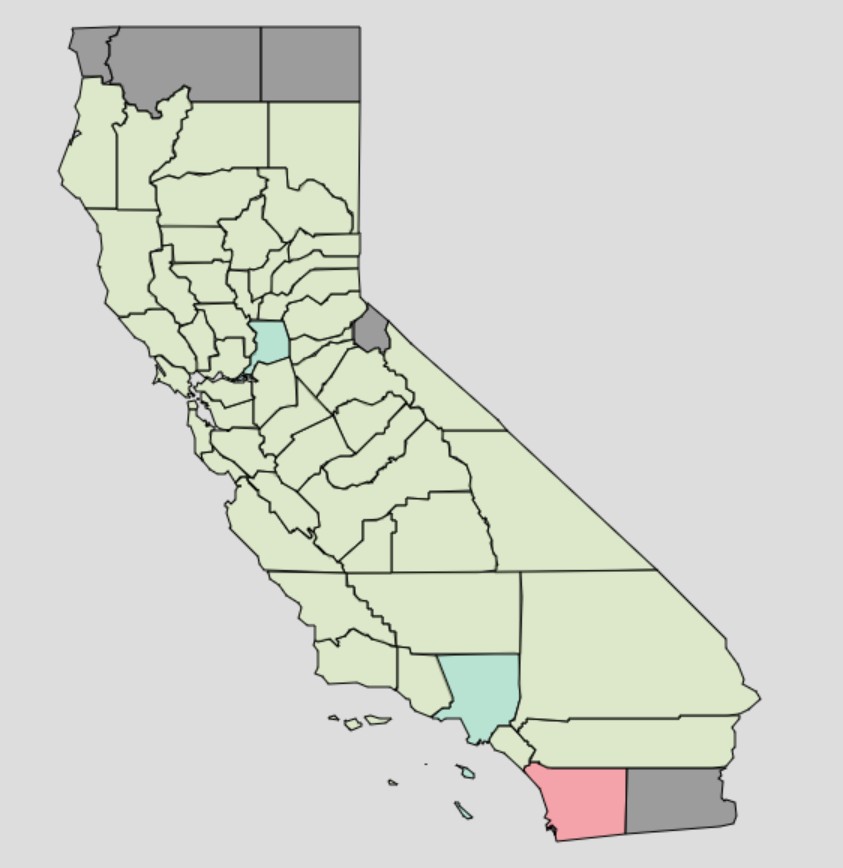
Explore real-time TOU pricing across CA counties using our Dashboard — and see how SDG&E compares.
📦 Summary: Off-Grid Readiness in a Nutshell
| Task | Status |
|---|---|
| SDG&E disconnection process | ☐ |
| Download and analyze Green Button data | ☐ |
| Solar + battery + backup system design | ☐ |
| Redundancy and spare planning | ☐ |
| Permits & inspections | ☐ |
| Final disconnection and safety check | ☐ |
| Long-term maintenance and monitoring plan | ☐ |
Ready to take the first step? Start by downloading your usage data, running the numbers, and exploring what a resilient, self-sufficient setup could look like.
Let us know what calculators or planning tools you'd like to see — and we’ll build them.