Are the Yellow Stickers overly conservative?
What is on the Energy Guide?
The energy guide found on new appliances in stores serves the purpose of providing consumers with an estimate of the annual energy consumption and operating costs associated with that particular appliance model. This guide is mandated by the Federal Trade Commission (FTC) for certain types of appliances, such as refrigerators, dishwashers, washing machines, and others.
The energy guide typically displays information such as:
- The estimated annual energy consumption of the appliance, expressed in kilowatt-hours (kWh) per year.
- A range of estimated annual operating costs based on the national average electricity rate, currently listed as 14 cents per kWh.
- A comparison of the appliance's energy consumption and operating costs with similar models, allowing consumers to compare energy efficiency and potential cost savings.
The purpose of this guide is to help consumers make informed decisions when purchasing appliances, taking into account not only the upfront cost but also the long-term energy costs associated with operating the appliance. By providing a standardized measure of energy consumption and estimated operating costs, consumers can evaluate different models and choose the most energy-efficient option that best suits their needs and budget.
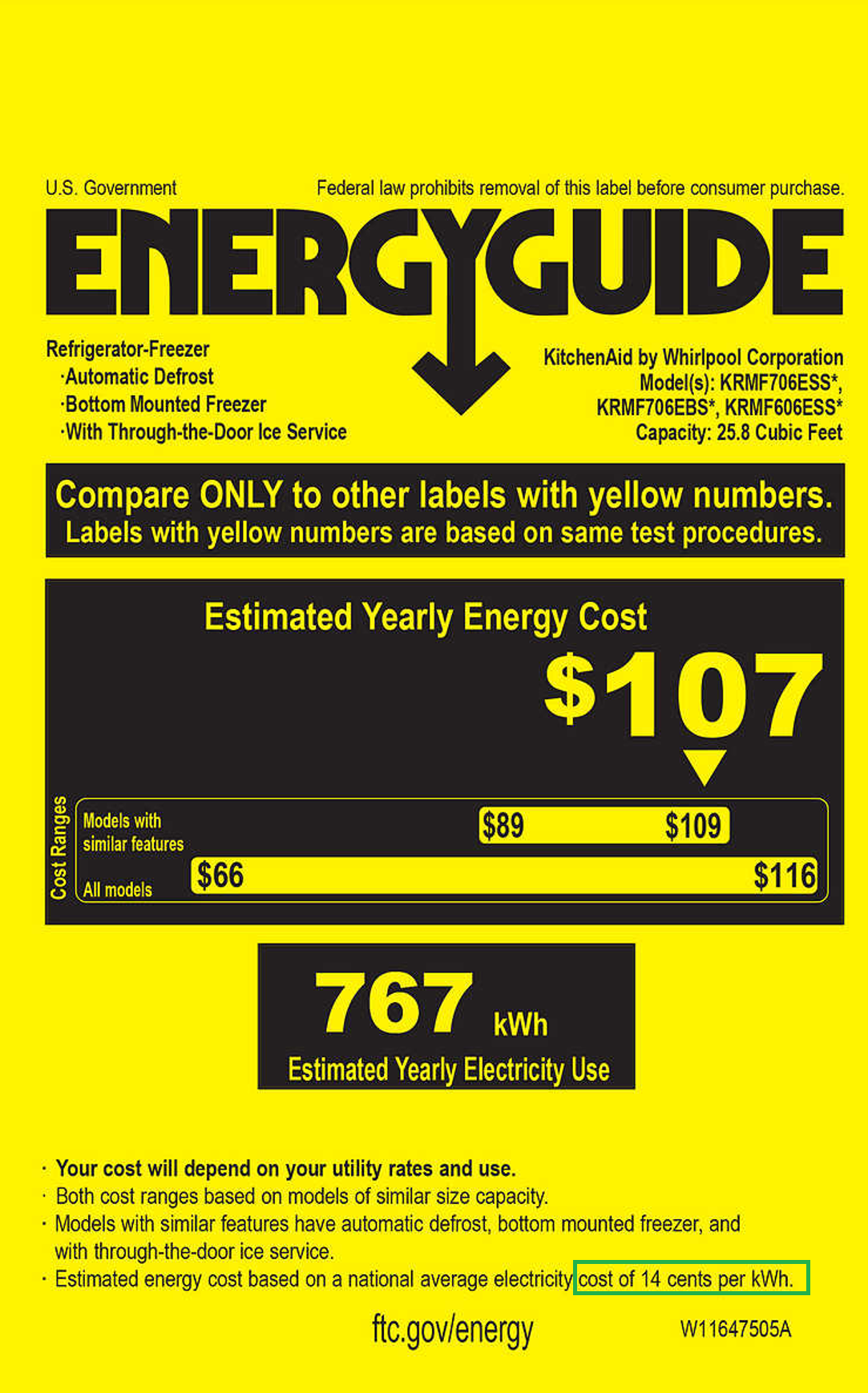
However, it's important to note that the actual operating costs for an appliance can vary significantly depending on the electricity rates in a specific location. The national average rate of 14 cents per kWh used on the energy guide is just a reference point, and it may not accurately reflect the actual costs in certain areas.
Electricity costs in San Diego are well above the national average
In the case of San Diego, the March 2024 price per kWh of $0.424, as reported by FRED (Federal Reserve Economic Data), is significantly higher than the national average used on the energy guide. This means that the estimated annual operating costs displayed on the energy guide will likely be lower than the actual costs a consumer in San Diego would incur when using that appliance.
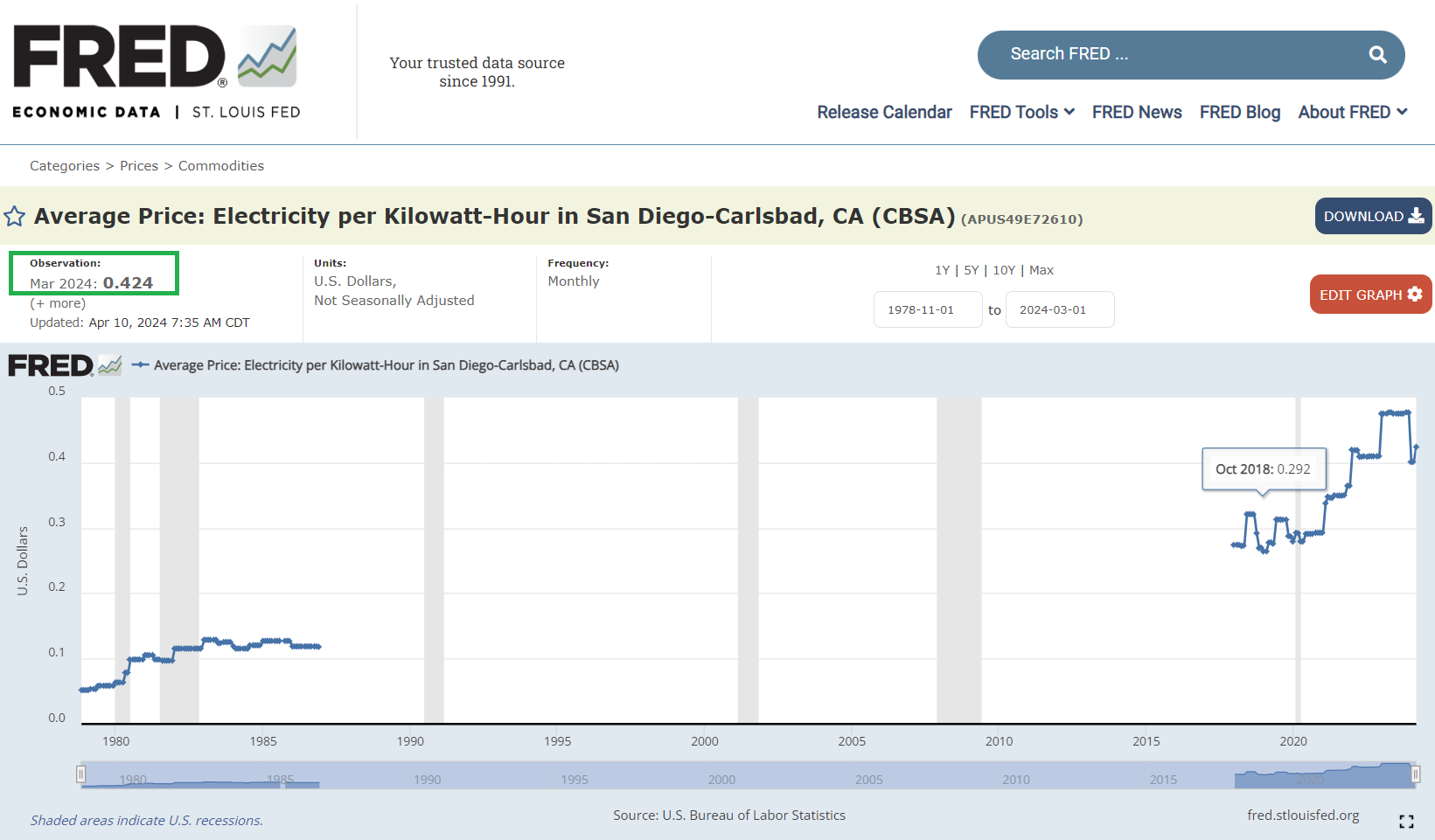
The higher electricity rates in San Diego can be attributed to various factors, such as the region's energy mix, transmission and distribution costs, and regulatory policies. As a result, consumers in San Diego should be aware that the operating costs for an appliance may be substantially higher than the estimates provided on the energy guide, and they should factor in the local electricity rates when evaluating the long-term costs of ownership.